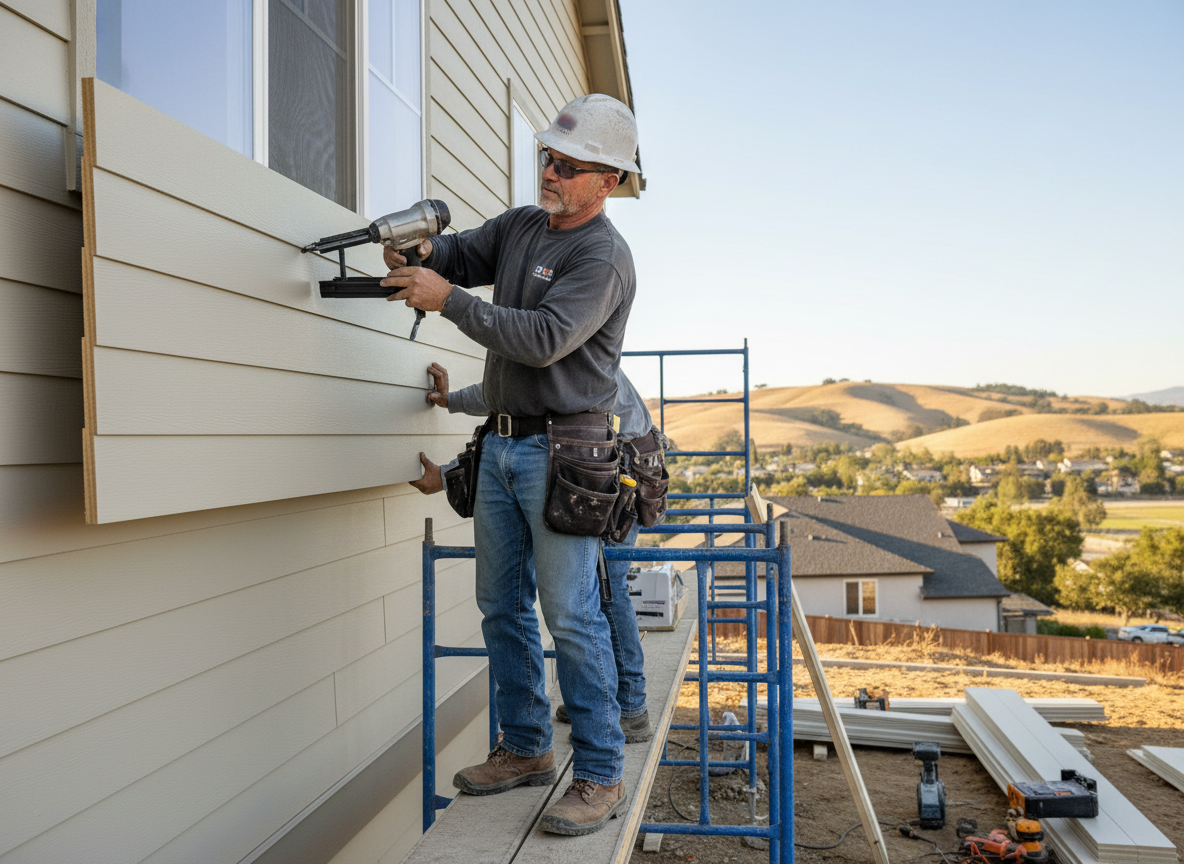
Oakley homes often date from the early 1900s through mid-century, featuring wood-frame construction and tight setbacks that limit staging space. Installing new siding requires careful removal of existing layers without damaging underlying sheathing or disturbing neighboring properties along streets like Madison Road. Proper flashing at windows and doors prevents water intrusion during the heavy spring rains common in Hamilton County.
Vinyl, fiber cement, and engineered wood each react differently to Cincinnati freeze-thaw cycles. Fiber cement expands less but demands precise nailing to avoid cracking on older, slightly out-of-plumb walls. We check for lead paint on pre-1978 homes before cutting and follow EPA guidelines for containment. Ventilation behind the new siding is increased on north-facing walls where moisture lingers longest.
Local building codes in Oakley require permits for any exterior work that alters the building envelope. We coordinate inspections with the city and ensure new siding meets the energy code requirements for continuous insulation where applicable. Homeowners frequently discover rotted rim boards once old siding is removed; addressing these during installation avoids callbacks later.
Traffic and parking constraints around Oakley Square mean crews stage materials efficiently and keep driveways clear. Evening and overnight work is possible given our 24/7 availability from the Linwood Avenue shop, which helps when residents prefer work completed outside normal business hours.
Technician insight
In Oakley, the thing that catches most people out with siding installation contractor is the hidden rim-board rot on 1920s–1940s homes along streets like Wasson and Hyde Park. Once you pull the old siding you find the real work starts there, and the freeze-thaw cycles here make skipping the repair a guarantee of callbacks within two winters.
Oakley Two-Story Frame Home
Homeowner called after noticing drafts around second-floor windows. We found water had wicked behind the original wood siding into the sheathing on the north wall. Removed damaged sections, replaced rotted rim board, installed new fiber cement siding with improved drainage gap, and sealed all penetrations. House now holds heat better and no further moisture issues reported.
How it works
- 1
Site Assessment
Measure all elevations, note window and door conditions, and check for rot or prior water damage on Oakley homes.
- 2
Material Selection
Review options that match the home's age and neighborhood style while meeting Hamilton County wind and moisture requirements.
- 3
Removal and Prep
Strip existing siding, repair sheathing, add housewrap and flashing, then verify drainage plane continuity.
- 4
Installation
Hang new siding with correct overlaps, expansion gaps, and trim details suited to Cincinnati temperature swings.
- 5
Final Inspection
Walk the job with the homeowner, confirm all penetrations are sealed, and schedule city inspection if required.
Pricing
Cost depends on square footage, material choice, and extent of hidden repairs uncovered during removal.